



 Almont4WD
 Bravo Snorkel
 Comeup
 Dragon Winch
 Equip'addict
 F4X4
 Husar Winch
 Land Rover Passion
 Steeler
 Warn
Steel rope or synthetic rope: which one to choose for a winch
19. Oct 2026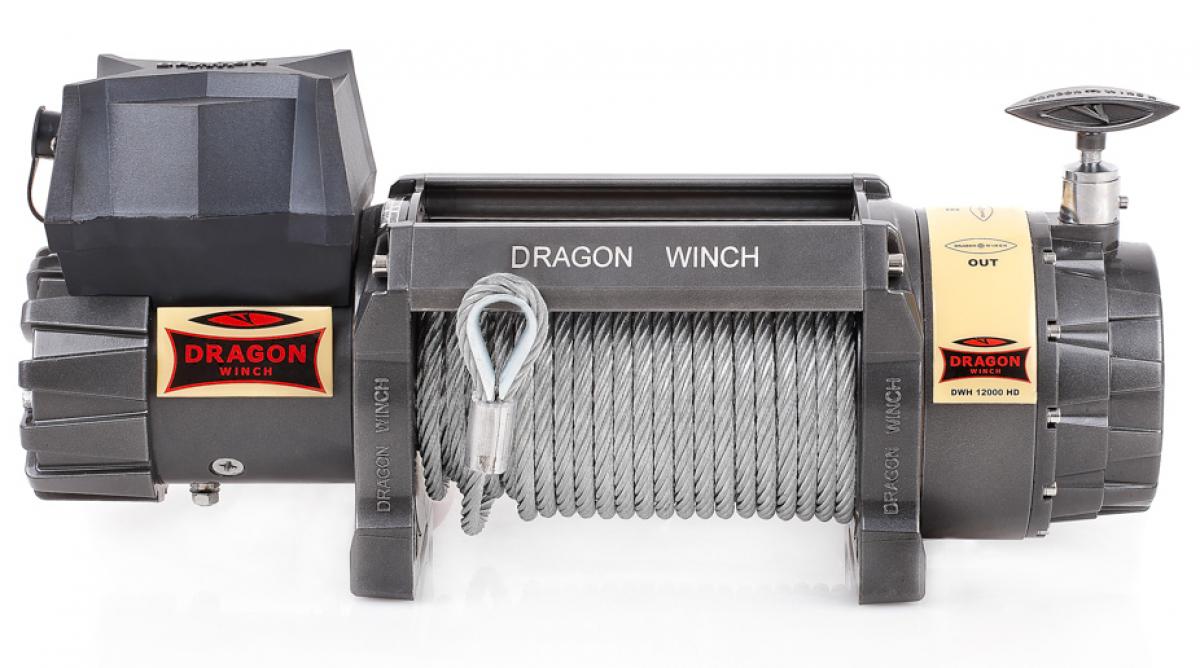
How to choose a winch: pulling force, current voltage and attachment
A winch pulls a car out of mud, snow or a ditch when there is no one else to call for help. The wrong winch does two things: a winch that is too weak will get stuck with a stuck car and overheat, a winch that is too big will be heavy, expensive and will draw more current from the battery than necessary. Below is what to look for when choosing. The order is the same as the one in which we recommend a winch to our customers.
1. Traction force: 1.5–2 times the total weight of the car
The most important number is the pulling force. The rule of thumb is simple: the winch's pulling force must be at least 1.5 times the total weight of the car. If you often drive in mud, deep snow or with a load, choose double.
Many manufacturers list the pulling force in pounds (lbs). To get the kilograms, multiply by 0.45: a 12,000 lb winch will pull about 5,400 kg.
The gross vehicle weight is stated on the registration certificate (line F.1). This is the weight of the car with its load, passengers and equipment, not the unladen weight. When the car is stuck, the obstacles are always greater than on a flat road: mud sucks the wheels in, the slope adds weight, and being completely covered in mud is especially difficult.
If a lot of equipment has been added to the car (racks, roof rack, tent, water tank) and you usually drive it fully loaded, include everything that is actually in the car in the gross weight.
| Vehicle gross weight | Winch pulling force at least | In the mud and with a load |
|---|---|---|
| 2500 kg | 3800 kg | 5000 kg |
| 3000 kg | 4500 kg | 6000 kg |
| 3500 kg | 5300 kg | 7000 kg |
| 4000 kg | 6000 kg | 8000 kg |
The winch's pulling force is applied to the first layer of the drum, when the drum is almost empty. The force decreases with each subsequent layer. You lose about a fifth on the second layer and about a tenth with each subsequent layer. For example, a 5400 kg winch can pull less than 3500 kg on the top layer. Therefore, unwind the line as long as possible and do not choose a winch that is on the limit.
You can also quickly calculate the tensile force with winch sheet calculator: enter the gross vehicle weight and it will show you the suitable winches.
2. For what vehicle: ATV, SUV or truck
- ATV and UTV winches up to 2495 kg. Also suitable for trailers, boat trailers and snowplows.
- 4x4 winches For SUVs and pickup trucks weighing 2500–6800 kg. Most Land Cruiser, Patrol, Hilux and Ranger owners will find a winch here.
- Truck and rescue winches over 6800 kg for trucks, tow trucks and rescue vehicles.
- Hydraulic winches for tractors and work trucks with hydraulic systems. They do not drain the battery and are better able to withstand long work.
For ATVs and UTVs, it is easier to base it on the type of vehicle instead of the gross weight:
| Vehicle | Winch pulling force |
|---|---|
| ATV | 1100–1600 kg |
| Two-seater UTV | 1600–2000 kg |
| Four-seater UTV | 2000–2500 kg |
3. 12V or 24V
Choose the same voltage as your car's electrical system. Cars and SUVs generally have 12V, but you can also find SUVs with 24V electrical systems, most trucks, and many military and utility vehicles have 24V.
An electric winch draws several hundred amps from the battery at full load. Keep the engine running while winching so that the generator can charge the battery. A winch with a weak battery is a weak winch: if the battery cannot provide current, even the largest winch will not draw full power. Choose a battery with a high capacity and starting current. If you winch often, it is worth considering a second battery. In addition, there is a great risk of overcharging a winch with a weak battery. When the voltage drops, the motor still wants to get its current, and this is dangerous for the equipment, because the higher current creates excessive heat in the wires and windings, which can burn out the motor or relay block.
4. Steel rope or synthetic rope
Steel rope is cheaper and can withstand rocks, stumps and sharp edges. Synthetic rope is several times lighter, does not rust and is safer in the event of a break. A more detailed comparison is in the article Steel cable or synthetic rope.
If you later change the rope to a string, change the guide as well: a roller guide goes with the rope, a smooth aluminum hawse guide goes with the string.
5. Speed, engine and water resistance
The motor of an electric winch is either series wound or permanent magnet. The series wound motor is better able to withstand heavy and long pulls and is the standard for heavier winches. The permanent magnet motor draws less current and is suitable for a winch that you use occasionally.
Speed is not the most important thing with a winch, because pulling a stuck car out is not a race. What is more important is that the motor can withstand a long pull without overheating. For heavier winches, read the product page to see what motor the winch has and how long it can run at full load. The winch reels in quickly when empty, but with a load the speed is usually only 1–2 meters per minute. The faster the winch is with a load, the more current it will draw.
Most modern winches have a planetary gearbox, which is compact and efficient. Look for an automatic load brake on the winch: this will hold the load in place when you release the switch and allow the line to be safely unwound with the load. Some manufacturers have the brake built into the drum (Comeup) and it does not heat up the drum. Again, the line likes this because the line does not tolerate heat.
The winch on the front winch gets water, mud and salt. Make sure the winch has good water resistance (IP class) and that the control box and remote control are sealed. In the Estonian winter and spring, this is more important than a few seconds of speed. However, you can also think the other way around, that what goes in well also comes out well. For a winch with an IP rating, the seals must be in order, because if, for example, you drive through a ditch with a warm winch and put the warm winch under water, then when it cools down, the winch will immediately suck in water if the seal is not tight. But it won't come out as easily.
The remote is important for safety. A wired remote will always work, while a wireless remote allows you to control the winch from a distance and from a place where you can clearly see the line and the car. Many winches come with both. Keep a wired remote in your car just in case, even if you usually use a wireless remote.
It is also a good idea to put a switch between the positive cable coming from the battery, which you turn off when the winch is not in use. This makes the winch safe - for example, if the remote control receiver for some reason still receives a signal to start winding, it can wind the entire nose of the car in this way. In addition, we have noticed that the winch motor is less oxidized on the inside, as it does not have a constant connection to the battery.
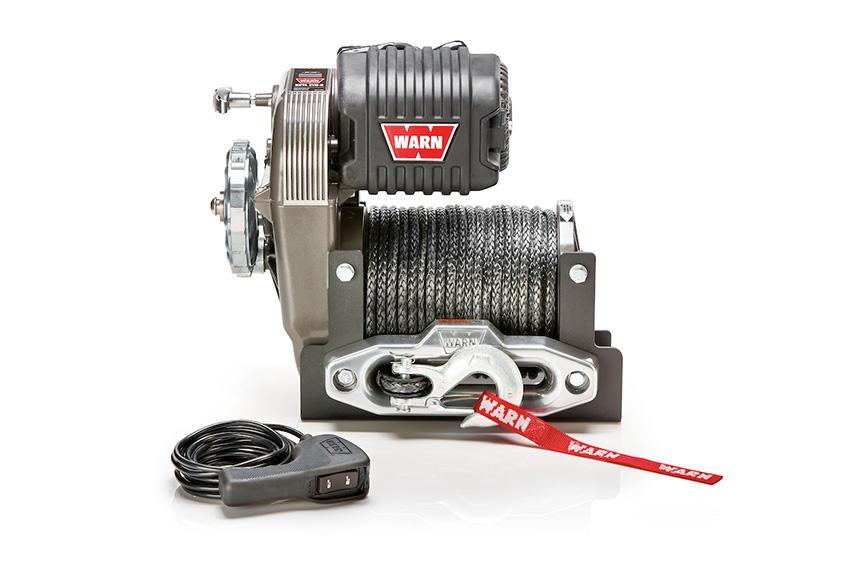
A winch is a piece of equipment that you need when something has already gone wrong. That's why it's worth choosing a manufacturer whose winches have spare parts and whose models have been used in the off-road for years. Our selection includes Warn, Dragon Winch, Husar Winch and Comeup.
6. Where to install the winch
The winch needs to be firmly attached to the car frame. There are two ways to do this:
- Front bumper with winch mount. The bumper also protects the front of the car and the winch is hidden.
- Winch mounting plate behind the factory bar. A cheaper solution if you don't want to replace the bar. Sometimes you have to make a hole in the bar for the guide.
If you drive a lot in snow, water, or deep mud, choose a mount that keeps the winch and control box as high off the ground as possible and doesn't reduce the angle of the front end of the car. If you rarely need a winch and drive mostly on gravel roads, a low mount behind the factory bumper is also suitable.
If you want to use the winch both front and rear, there is winch mounts for the hitch.
You can find the right bars and plates for your car by car, for example Toyota Land Cruiser or Toyota Hilux.
7. Line length
A long line allows you to attach it further to the tree, but on a full drum the winch pulls the weakest and a long line tends to compress itself on the drum and if this is not observed when winding and the line is allowed to pile up on one edge of the drum, the result can be a bent or even broken drum with the winch leg. Many experienced winchers prefer a shorter line and take an extension strap with them. This way the winch mostly works on the lower layers, where the force is the most.
8. What else is needed?
It is worth bringing a tree protection strap, a roller block (doubles the pulling force and helps you pull at an angle), gloves and a line-damping „blanket“ with the winch. Read before your first pull winch instruction manual.
Frequently asked questions
Is a bigger winch always better?
No. A winch that is too big is heavy and puts extra strain on the front axle. It also draws more current and is more expensive. Choose a gross vehicle weight factor of 1.5–2 and don't go much higher.
Can an ATV winch be put on an SUV?
You can, but it's not designed for that. An ATV winch is designed to pull up to 2495 kg, and the weight of an SUV is too much for that. In an emergency, you could damage the winch or break the line.
Can it be lifted with a winch?
The car must not be lifted with a winch because it does not have a brake to hold the load. For lifting, lifting winches.
What if I don't know which winch is suitable?
Tell us your car model and how you plan to use the winch. We will recommend a suitable winch and attachment. Contact: info@jrmotors.ee.
