













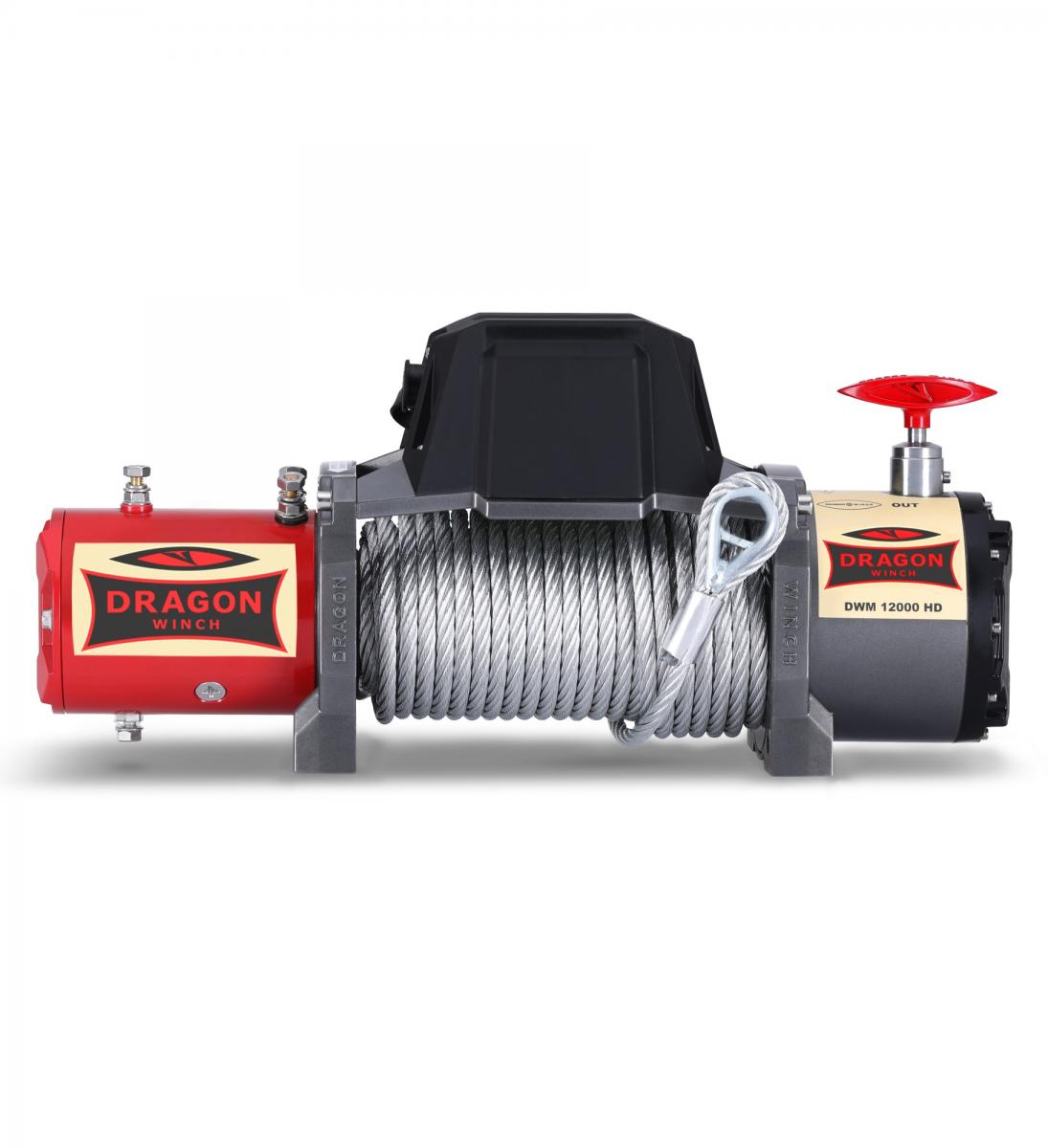
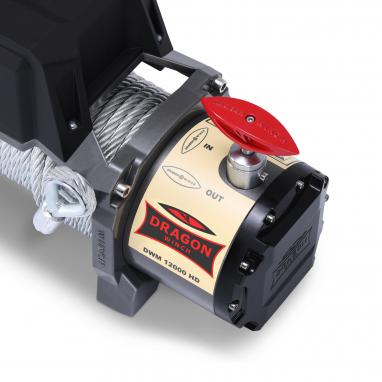
DWM 12000 HD
The DWM 12000 HD comes with steel cable, which stands up to wear and heat better than rope. The same winch with synthetic rope is the DWM 12000 HD-S. On the first cable layer the winch spools in at 5.9 m/min with no load and 0.9 m/min at full load. On the last (5th) layer the pulling capacity is 2667 kg, so for a heavy pull, spool the cable out first so you work on the lower layers.
Options
Choose the right version on the product page before adding to basket:
- 12 V – for cars, 4x4s and pickups with a 12 V electrical system
- 24 V – for cars, 4x4s and pickups, trucks, buses and heavy machinery with a 24 V electrical system
- With 20 m of cable – gets you out and leaves more room on the drum, but the reach is short
- With 30 m of cable – more reach when there is no anchor point nearby, but you need to take more care when spooling it onto the drum
Use
- 4x4s and pickups
- Off-roading and expeditions
- Service and work vehicles
Specifications
- Pulling capacity: 12,000 lb / 5443 kg
- Voltage: 12 V or 24 V
- Motor: 6.8 hp
- Gearbox: 3-stage planetary gearbox
- Gear ratio: 265:1
- Brake: dynamic
- Steel cable: 20 m or 30 m
- Line speed on 1st layer: 5.9 m/min no load, 0.9 m/min at full load
- Current draw at full load: 415 A (12 V), 225 A (24 V)
- Pulling capacity by layer: 5443 / 4299 / 3701 / 3211 / 2667 kg (layers 1–5)
- Drum capacity: 30 m
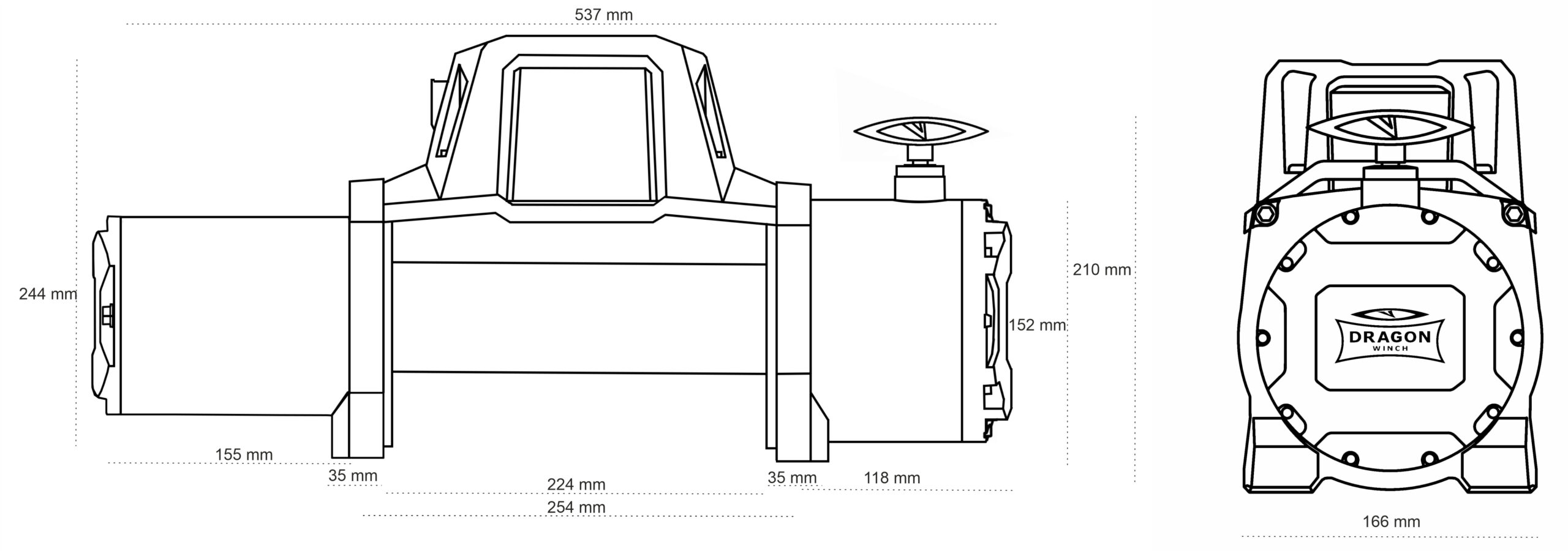
- Mounting hole spacing: 254 mm × 114 mm
- Dimensions (L×W×H): 537 mm × 166 mm × 244 mm
- Product code: DWM 12000 HD
- Series: Dragon Winch Maverick
Steel cable or synthetic rope?
The motor, gearbox and pulling capacity are the same on the HD and HD-S versions. The difference is the line and the fairlead.
| Steel cable (HD) | Synthetic rope (HD-S) | |
|---|---|---|
| Weight (~25 m) | 9–11 kg | 2–3 kg |
| If it snaps | Whips back with great force | Usually drops to the ground |
| Rocks, stumps, sharp edges | Copes | Needs a protective sleeve |
| Long pull, hot drum | Copes | Damages the rope |
| Rust and road salt | Rusts | Does not rust |
| On your hands | Broken strands cut, wear gloves | Safer |
| In winter | Works even when iced up | Wet rope freezes together on the drum |
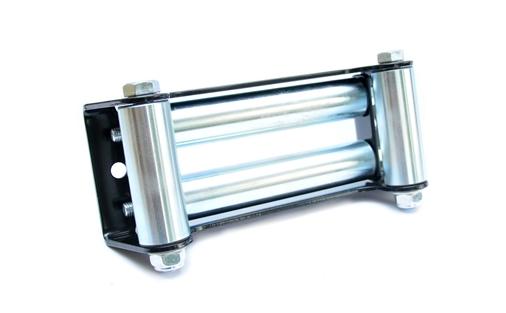
| Fairlead | Roller fairlead | Aluminium hawse fairlead |
| Price | Cheaper | More expensive |
Steel cable is the right choice if the winch is used for hauling timber, you don't want to worry about whether the line runs over rocks or logs, or you want to save money when buying the winch.
Synthetic rope is the right choice if you want to make winching safer. When it breaks, the rope stores much less kinetic energy than steel cable, so it does not whip back the way steel cable does and the risk of injury is lower. You don't need heavy-duty gloves when handling the rope, because there are no steel strands to cut your hands.
It is always advisable to place a "damper" that absorbs kinetic energy in the middle of the winch line in case the line snaps while winching. Keep at least 5 wraps on the drum, plus one more turn over those five – with both cable and rope. This anchors the line firmly to the drum.
Want something lighter and easier to handle? The same winch with synthetic rope is the DWM 12000 HD-S.
Installation
The 254 × 114 mm mounting hole spacing is a common standard for full-size winches, so the winch fits most winch mounting plates and bumpers with a winch mount.
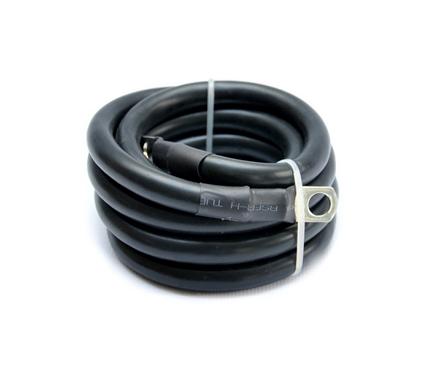
At full load the winch draws up to 415 A, so connect the power cables directly to the battery and keep the engine running while winching.
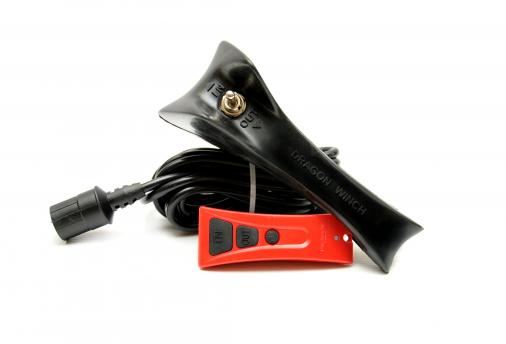
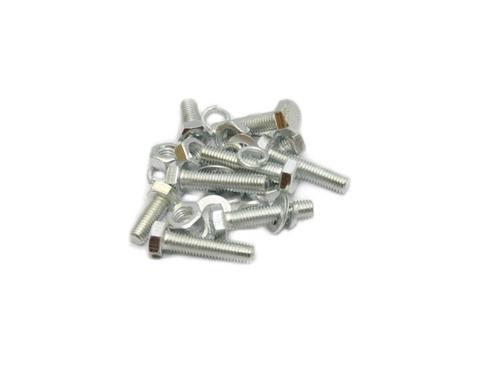
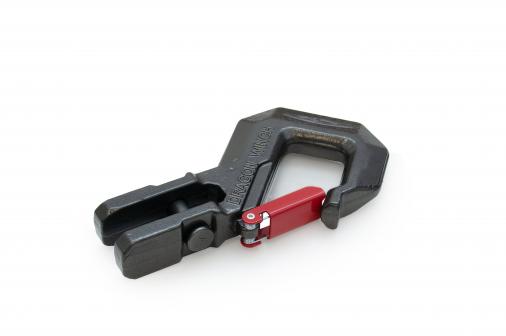
In the box: the steel cable winch comes with a roller fairlead. Other contents are shown in the product photos.
Delivery
Shipped by courier. We will confirm the delivery time when the order is confirmed.